
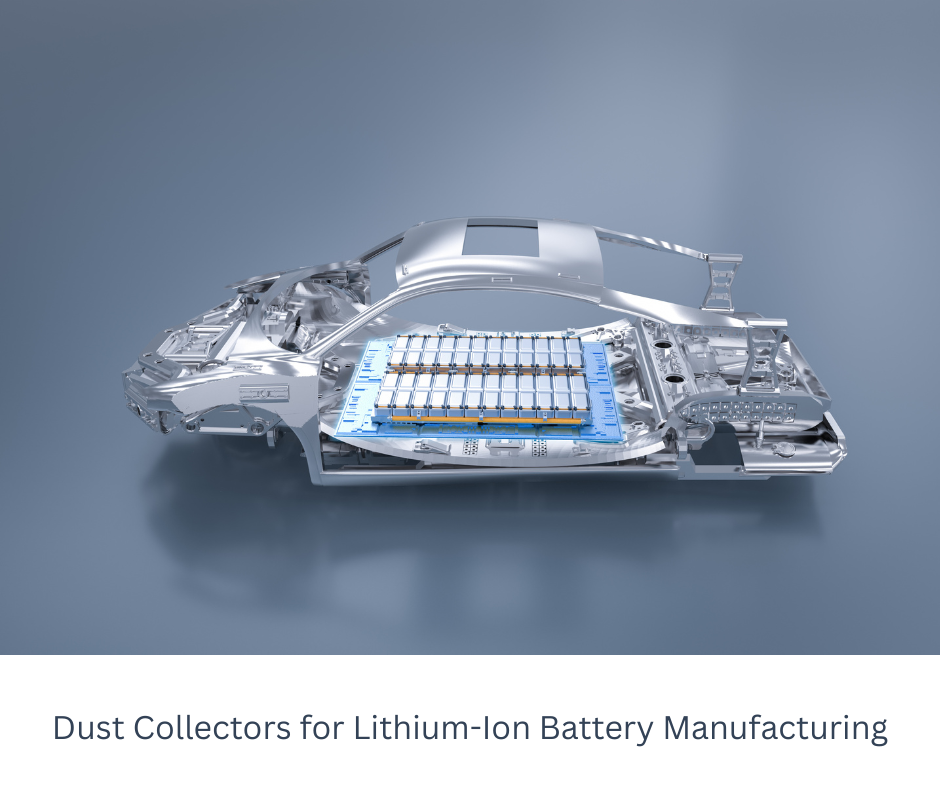
The rapid growth of electric vehicles has transformed lithium-ion battery manufacturing into one of the most advanced and tightly regulated industrial processes in the world. Behind every EV battery pack is a complex production environment involving fine powders, chemical fumes, metal particulates, and high-energy processes.
From cathode material mixing to welding and recycling, lithium-ion battery plants generate hazardous dust and fumes that must be captured at the source. A well-designed dust collection system protects workers, prevents fires and explosions, safeguards sensitive equipment, and ensures consistent battery performance.
At Atmax Filtration, we work closely with lithium-ion battery manufacturers and supply industrial dust collection and ventilation systems that meet the demanding requirements of modern EV battery production.
Why Lithium-Ion Battery Manufacturing Needs Specialized Dust Collectors
Battery production deals with ultra-fine, reactive, and sometimes combustible materials. Even small airborne particles can create serious risks such as,
- Combustible dust from graphite, carbon black, and metal powders
- Hazardous fumes from solvents, binders, and electrolytes
- Submicron particulates that affect product purity
- Strict regulatory requirements for worker exposure and emissions
- Highly automated processes that cannot afford downtime
Lithium-ion battery facilities require application-specific dust and fume collection systems engineered for continuous operation, high filtration efficiency, and safe handling of combustible dust.
Atmax Filtration specializes in custom-engineered dust collectors, industrial ventilation systems, and high-efficiency filtration solutions designed specifically for such high-risk, high-precision manufacturing environments.
Dust and Fume Generation Across the Battery Manufacturing Process
Each stage of lithium-ion battery production presents a unique dust or fume control challenge. A one-size-fits-all approach does not work.
1. Mixing of Cathode and Anode Materials
This is one of the most critical stages of battery manufacturing. Fine powders such as lithium compounds, graphite, nickel, cobalt, and manganese are blended in controlled conditions.
Key risks include:
- Airborne toxic dust
- Cross-contamination between batches
- Combustible particulate accumulation
Atmax Filtration designs high-efficiency dust collection systems with fine-fiber filter media to capture submicron particles, maintain clean processing conditions, and reduce exposure risks for operators.
2. Coating and Slurry Application
During coating, solvent vapors, mist, and fine particulates are released as electrode materials are applied to metal foils. Proper dust and mist collection:
- Controls solvent fumes
- Prevents residue buildup on precision equipment
- Supports cleanroom or near-cleanroom conditions
Atmax provides source-capture hoods, ducting design, and filtration systems that integrate seamlessly with coating lines and drying ovens.
3. Material Handling and Powder Transfer
Powder unloading, conveying, and transfer points are major sources of fugitive dust.Well-designed dust collection systems:
- Capture dust at the source
- Reduce housekeeping and cleanup costs
- Protect downstream automation
Atmax Filtration offers custom ducting layouts, rotary air locks, and dust collectors engineered to handle fine battery-grade powders safely and efficiently.
4. Machining and Metalworking
Processes such as slitting, cutting, and trimming generate metallic dust and sharp particulates. Dust collectors in these areas must:
- Handle abrasive particles
- Maintain consistent airflow
- Reduce spark and ignition risks
Atmax supplies industrial dust collectors and explosion-conscious ventilation designs suitable for metalworking operations within battery plants.
5. Drying and Thermal Processes
Drying ovens and thermal processes release fine particulate matter and fumes that must be controlled to protect both workers and equipment.
Atmax Filtration designs balanced exhaust and filtration systems that support stable airflow, improved energy efficiency, and regulatory compliance.
6. Welding and Cell Assembly
Laser and ultrasonic welding generate fumes containing metal oxides and ultrafine particles. Effective weld fume extraction:
- Protects operators
- Prevents contamination of battery cells
- Maintains performance of automated assembly lines
Atmax provides modular weld fume extraction systems with high-efficiency filters tailored for continuous production environments.
7. Battery Recycling and End-of-Life Processing
Battery recycling generates complex and potentially hazardous dust mixtures. Dust collection systems for recycling areas must handle:
- Mixed material dust
- Conductive and fine particulates
- Variable particle sizes
Atmax Filtration supports battery recycling operations with robust dust collection and filtration solutions designed for safety, durability, and long-term operation.
Key Features of Atmax Dust Collectors for EV Battery Plants
Atmax Filtration focuses on designing systems that meet the real-world demands of lithium-ion battery manufacturing.
1. High-Efficiency Filtration
Battery production often requires filtration down to 0.3 micron to control submicron dust. Atmax systems are designed to accommodate fine-fiber, high-efficiency filter media to protect both people and product quality.
2. Combustible Dust Considerations
Many battery materials are combustible. Atmax takes a process-first approach to:
- Airflow design
- Grounded ducting
- Safe dust handling
This helps reduce fire and explosion risks within battery manufacturing facilities.
3. Modular and Scalable Design
Giga factories evolve quickly. Atmax designs modular dust collection systems that can expand with production growth, line modifications, or future capacity increases.
4. Energy-Efficient Operation
Optimized fan selection, low-pressure-drop filters, and efficient duct layouts help reduce long-term operating costs without compromising performance.
5. Reliability in Automated Environments
Highly automated battery plants demand consistent airflow and predictable filtration performance. Atmax systems are engineered for minimal downtime and stable operation.
6. Supporting Compliance and Worker Safety
Lithium-ion battery manufacturers face increasing environmental and occupational safety requirements.
Atmax Filtration helps facilities:
- Control worker exposure to hazardous dust and fumes
- Reduce emissions
- Improve overall indoor air quality
- Create safer, cleaner production environments. Clean air directly supports employee health, productivity, and retention.
7. Improving Battery Quality Through Better Air Control
Airborne contamination can directly impact battery performance and consistency. Effective dust collection:
- Prevents contamination of electrodes and cells
- Reduces defect rates
- Protects sensitive automation and robotics
Atmax Filtration approaches dust collection as a process-quality solution, not just an air handling system.
End-to-End Support from Design to Operation
Our capabilities include:
- System design and equipment supply
- Industrial ventilation and ducting design
- Startup and commissioning support
- Troubleshooting and performance optimization
We focus on long-term reliability, not short-term fixes.
Final Thoughts
As electric vehicle demand accelerates, lithium-ion battery manufacturing will continue to face tighter regulations, higher production speeds, and greater safety expectations.
Dust collectors are no longer optional equipment. They are a critical component of safe, scalable, and high-quality battery production.
Atmax Filtration partners with lithium-ion battery manufacturers to deliver custom dust collection and industrial ventilation solutions that protect workers, equipment, and product integrity, while supporting the future of clean mobility. Clean air is not a luxury in EV battery plants. It is part of the process.