
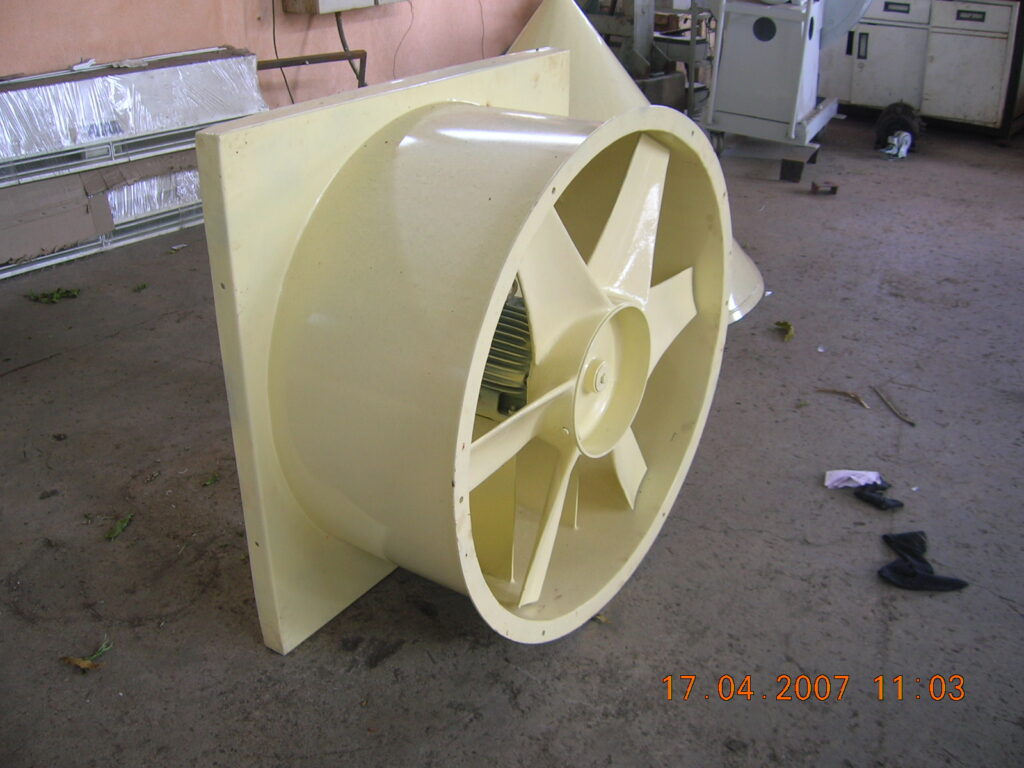
Industrial fans are critical for ventilation, dust control, fume extraction, and process support across countless industries from chemical plants to automotive factories. Yet, fan performance is not just about selecting a big fan and switching it on.
In reality, dozens of variables influence how well a fan performs. A poorly applied or maintained fan can waste energy, underperform, or even fail prematurely. For engineers, plant managers, and maintenance teams, understanding these factors is the first step to optimizing airflow, reducing costs, and ensuring system reliability.
Top 10 factors that affect industrial fan performance
1. Fan Selection and Sizing
Choosing the wrong type of fan is one of the most common mistakes. A centrifugal fan may be ideal for high-pressure applications, while an axial fan works best for high-volume, low-pressure environments.
Impact:
- An oversized fan wastes horsepower and energy.
- An undersized fan cannot meet airflow requirements.
Tip: Always use fan curves and system resistance calculations to size fans correctly.
2. System Resistance (Static Pressure)
Fan performance is directly tied to the resistance created by ducts, filters, dampers, elbows, and process equipment.
Impact:
- Higher resistance reduces airflow.
- Mismatched system and fan curves force the fan to operate inefficiently.
Tip: Design ductwork for smooth airflow with minimal pressure losses.
3. Impeller Design and Condition
The impeller is the heart of the fan. Its design and balance determine efficiency and reliability.
Impact:
- Worn, corroded, or unbalanced impellers increase vibration.
- Dust buildup reduces efficiency and overloads bearings.
Tip: Inspect and clean impellers regularly, and ensure dynamic balancing during maintenance.
4. Bearings and Shaft Alignment
Bearings carry the mechanical load of the fan, and alignment ensures smooth rotation.
Impact:
- Poor lubrication or contamination leads to bearing failures.
- Misaligned shafts increase vibration and shorten fan life.
Tip: Implement a predictive maintenance program with vibration and temperature monitoring.
5. Motor and Drive System
The fan is only as good as the motor and drive powering it. Belt drives, couplings, and direct-drive configurations each have pros and cons.
Impact:
- Incorrect belt tension wastes energy and causes slippage.
- Misaligned couplings create excess wear.
- Inadequate motor sizing risks overheating and breakdown.
Tip: Use Variable Frequency Drives (VFDs) for energy-efficient control.
6. Operating Environment
Fans in harsh environments face unique challenges:
- Corrosive fumes in chemical plants.
- High temperatures in furnaces or kilns.
- Abrasive dust in cement or grain processing.
Impact:
- Standard materials may corrode or erode quickly.
- High temperatures shorten bearing and motor life.
Tip: Use FRP fans for corrosive environments and special coatings for abrasive service.
7. Vibration and Balancing
Excessive vibration is a major cause of premature fan failure.
Impact:
- Damages bearings, impellers, and motor foundations.
- Increases noise and energy consumption.
Tip: Perform regular dynamic balancing, ensure proper mounting, and install vibration monitoring sensors.
8. Maintenance Practices
Even the best-designed fan will fail without proper care.
Impact:
- Neglected lubrication, filter replacement, or alignment checks cause avoidable downtime.
- Emergency repairs are far more expensive than preventive maintenance.
Tip: Adopt a reliability-centered maintenance (RCM) approach with documented schedules.
9. Air Density and Temperature
Air properties change with temperature, altitude, and humidity. Fans move volume (CFM), but horsepower requirements depend on actual air density.
Impact:
- Hot or high-altitude environments reduce air density, lowering fan performance.
- Miscalculations result in underperforming systems.
Tip: Always correct for air density when sizing fans in high-temp or high-altitude applications.
10. Installation and Ductwork Design
Even a perfectly selected fan can underperform if poorly installed.
Impact:
- Poor inlet/outlet conditions (sharp bends, restrictions) create turbulence.
- Leaks in ducts waste energy and reduce system efficiency.
Tip: Follow AMCA guidelines for proper inlet clearance, straight duct runs, and smooth transitions
Conclusion
Industrial fan performance depends on more than just horsepower and airflow ratings. Selection, system design, impeller health, bearings, vibration control, and environmental factors all play critical roles in determining whether your fan runs efficiently and reliably.
Atmax Filtration helps industries optimize fan performance through correct fan selection, system resistance analysis, impeller balancing, and predictive maintenance strategies. With the right approach, you can extend fan life, cut energy costs, and ensure safe, reliable operation even in the harshest environments.
If your facility is facing fan performance issues, Atmax Filtration’s experts can help identify the root causes and engineer solutions tailored to your application.