
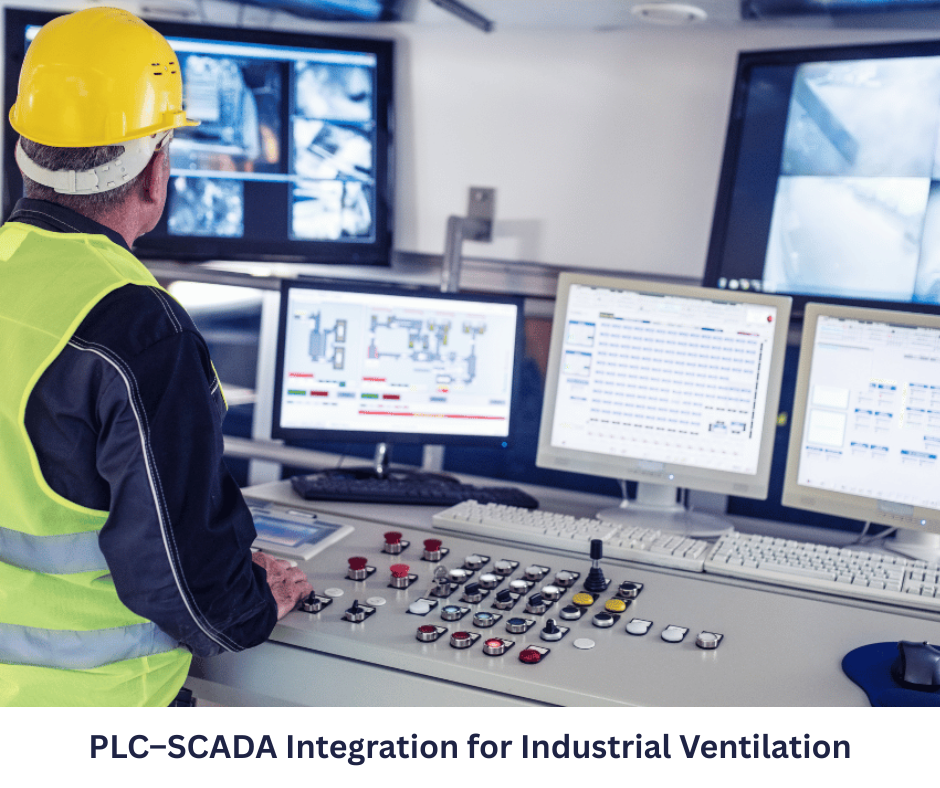
In many plants, ventilation systems run quietly in the background. But when airflow drops, dust escapes, or temperatures rise, production and safety are affected immediately. This is where PLC and SCADA integration becomes valuable. It gives local control at the equipment level and centralized visibility across the facility.
For industries using dust collectors, process exhaust, fume extraction, or large HVAC systems, a well-integrated PLC–SCADA setup improves reliability, energy efficiency, and response to changing plant conditions.
Local Control First
Ventilation systems need a fast response. If a fan trips or differential pressure rises suddenly, the system cannot wait for commands from a central server.
The PLC handles:
- Fan start/stop logic
- VFD speed control
- Damper positioning
- Filter cleaning sequences
- Safety interlocks
SCADA collects and displays:
- Airflow trends
- Static pressure across ducts
- Differential pressure across filters
- Fan load and energy consumption
- System alarms and equipment status
This balance keeps the system stable locally while giving plant engineers full visibility.
Parameters to Be Monitored?
A good ventilation SCADA system focuses on operational health, not just equipment status.Typical data points include:
- Airflow or velocity at critical points
- Static pressure in main ducts
- Differential pressure across bag filters or cartridges
- Fan vibration, current, and temperature
- VFD frequency and power consumption
- Damper positions
Tracking these trends helps identify issues early, such as filter choking, duct leakage, or operating fans outside their design range.
Communication and Network Considerations
Ventilation systems are often spread across large production areas. Reliable communication between PLC panels and SCADA is essential.
Common protocols are:-
- Modbus TCP for simple plant networks
- Ethernet/IP or Profinet for integrated automation environments
- OPC UA for secure, scalable data exchange
Industrial-grade network switches, proper cable routing, and electrical noise protection are important. Many “intermittent SCADA problems” are actually network quality issues.
Energy Optimization Through Integration
One of the biggest advantages of PLC–SCADA integration is energy control. With proper logic and monitoring, the system can:
- Adjust fan speed based on process demand
- Reduce airflow during idle periods
- Maintain the target static pressure instead of running at full load
- Identify inefficient operating conditions
Since fans are major power consumers, even small speed reductions can deliver significant savings.
Alarm Strategy Matters
Ventilation systems generate a lot of signals. Without proper filtering, operators get flooded with alarms.
Good practice includes:
- Priority levels for critical vs advisory alarms
- Time delays to avoid nuisance alerts
- Clear messages, such as “Filter DP High” instead of generic faults.
Designing for Expansion and Maintenance
New machines, production lines, or process changes often require ventilation modifications. During integration, plan for
- Spare PLC I/O capacity
- Network bandwidth margin
- Structured tag naming
- Proper documentation and backups
SCADA should make future expansion easier, not require a complete redesign.
Where Integration Delivers the Most Value
PLC–SCADA integration is especially useful for
- Centralized dust collection systems
- Multi-fan process exhaust networks
- Thermal process ventilation
- Large manufacturing facilities with distributed airflow systems
Instead of reacting to complaints like dust leakage or poor extraction, maintenance teams can see trends and act before problems affect production.
Conclusion
Industrial ventilation systems perform best when they are monitored, controlled, and adjusted based on real operating conditions. PLC and SCADA integration brings the visibility needed to maintain stable airflow, reduce energy consumption, and prevent issues before they affect production or compliance. With the right engineering approach, ventilation becomes a controlled and reliable process rather than a background utility.
At Atmax Filtration Elements Inc., the focus is on designing practical control and monitoring solutions that work in real plant conditions, helping industries improve system reliability, performance, and long-term operating efficiency.