
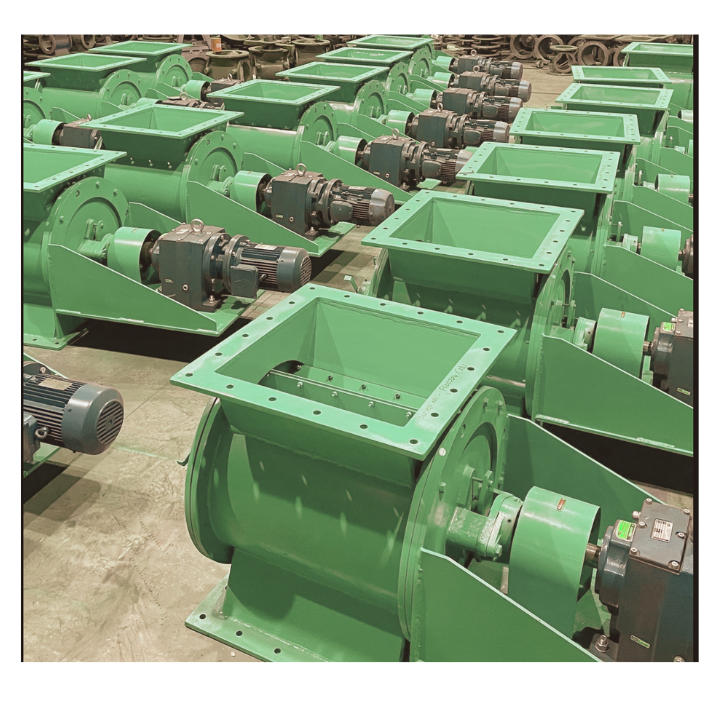
In modern industrial operations, efficiency, reliability, and process control are essential for maintaining productivity and minimizing operating costs. Every component within a bulk material handling, dust collection, or pneumatic conveying system plays a vital role in achieving these objectives including the rotary airlock valve.
Often installed beneath dust collectors, cyclones, hoppers, silos, and process equipment, rotary airlock valves serve as a critical interface between different process stages. By enabling controlled material discharge while maintaining system pressure integrity, they help optimize equipment performance, improve energy efficiency, and support consistent production operations.
However, selecting the right rotary airlock valve involves much more than matching inlet and outlet dimensions. Material characteristics, operating conditions, pressure differentials, temperature requirements, maintenance expectations, and long-term performance objectives must all be carefully evaluated to ensure reliable operation and maximum return on investment.
A properly engineered rotary airlock can enhance process efficiency, reduce maintenance requirements, minimize air leakage, and extend equipment life.
In this guide, the engineering experts at Atmax Filtration Elements Inc. outline the key factors facility managers, process engineers, and procurement teams should consider when selecting a rotary airlock valve for industrial applications, helping organizations make informed decisions that support both operational performance and long-term reliability.
What Is a Rotary Airlock Valve?
A rotary airlock valve is a precision-engineered device designed to transfer dry bulk materials between zones operating at different pressures while minimizing air leakage.
The valve performs two critical functions simultaneously:
- It regulates and controls material discharge.
- It maintains the pressure differential between connected process equipment.
Rotary airlocks are commonly installed beneath:
- Baghouse dust collectors
- Cyclone separators
- Storage silos
- Surge hoppers
- Mixers
- Dryers
- Pneumatic conveying systems
- Process vessels
- Material recovery systems
Without a properly selected airlock, valuable process air escapes, conveying efficiency drops, dust collection systems lose effectiveness, and energy costs increase.
Why Proper Rotary Airlock Selection Matters
Many facilities choose rotary airlocks based solely on size or price. This approach often results in costly operational problems later.
A properly selected rotary airlock contributes to:
Improved Dust Collection Efficiency- In baghouse and cartridge dust collection systems, excessive air leakage through an undersized or improperly designed airlock can reduce system suction, decrease filter cleaning efficiency, and increase emissions.
Reduced Energy Consumption-Compressed air systems and industrial fans consume significant energy. Air leakage through poorly selected airlocks forces blowers, exhaust fans, and compressors to work harder, increasing operating costs.
Longer Equipment Life- When material characteristics are properly matched to valve design, wear on rotors, housings, seals, bearings, and drive systems is significantly reduced.
Consistent Process Performance- Stable material feeding improves product quality, process consistency, and overall production efficiency.
Enhanced Workplace Safety- Properly selected airlocks help control combustible dust hazards, reduce fugitive emissions, and support compliance with industrial safety standards.
Important Factors When Selecting a Rotary Airlock Valve
Selecting the correct valve requires understanding both the material being handled and the process conditions under which the valve will operate.
1. Material Characteristics
The first step in rotary airlock selection is understanding the material itself.
Questions to consider include:
- Is the material a powder, pellet, granule, flake, fiber, or dust?
- Is it free-flowing or cohesive?
- Is it abrasive?
- Is it hygroscopic?
- Does it tend to bridge or compact?
- Is it fragile and prone to degradation?
Materials such as silica, fly ash, cement, mineral powders, foundry sand, and metal dust can be highly abrasive and require specialized wear-resistant construction.
Meanwhile, fragile materials such as plastic pellets, food ingredients, and specialty chemicals require designs that minimize particle damage.
Failure to properly evaluate material properties often results in excessive wear, rotor jamming, product degradation, and increased maintenance frequency.
2. Bulk Density and Material Throughput
One of the most common mistakes in airlock selection is focusing solely on inlet and outlet dimensions while ignoring actual throughput requirements.
The valve must be capable of handling the required volume of material while maintaining process stability.
Important calculations include:
- Bulk density
- Material feed rate
- Hourly throughput requirements
- Peak loading conditions
- System operating factors
Oversized valves can create inconsistent feeding patterns, while undersized valves may become bottlenecks that limit production capacity.
Engineering calculations should always consider future production expansion to avoid premature equipment replacement.
3. Pressure Differential Across the Valve
Pressure differential is among the most critical factors affecting rotary airlock performance.
The greater the pressure difference between the inlet and outlet sides, the more challenging it becomes to maintain an effective air seal.
Applications commonly involve:
- Negative pressure systems
- Positive pressure systems
- High-vacuum conveying systems
- Dust collection systems
- Pneumatic conveying systems
Higher pressure differentials require tighter manufacturing tolerances, improved sealing arrangements, stronger housing construction, and specialized shaft sealing systems.
Ignoring pressure requirements can result in:
- Excessive air leakage
- Reduced conveying efficiency
- Product loss
- Increased energy consumption
- Process instability
4. Operating Temperature
Temperature significantly influences valve design and material selection.Industrial facilities often operate under demanding thermal conditions, including:
- Hot fly ash discharge
- Boiler ash handling
- Furnace exhaust collection
- Chemical processing
- Drying systems
- Thermal oxidizer applications
Elevated temperatures can cause:
- Thermal expansion
- Seal degradation
- Lubricant breakdown
- Bearing failures
- Reduced component life
High-temperature applications may require specialized metallurgy, heat-resistant seals, external bearings, and thermal isolation features.
A thorough temperature analysis should include both normal operating conditions and potential upset conditions.
5. Air Leakage Requirements
No rotary airlock valve is completely airtight.However, minimizing air leakage is essential for maximizing system efficiency. Even small amounts of leakage can create major operational issues in:
- Dust collection systems
- Pneumatic conveying systems
- Vacuum conveying applications
- Process air handling systems
Excessive leakage often leads to:
- Reduced system capacity
- Increased blower energy consumption
- Material carryover
- Poor dust collector performance
- Production inefficiencies
The economic impact of leakage often exceeds the initial cost difference between standard and premium valve designs.
6. Wear Resistance and Service Life
Many industrial facilities operate continuously for thousands of hours annually.In these environments, wear resistance becomes a major selection criterion.
Highly abrasive materials include:
- Cement
- Fly ash
- Silica dust
- Lime
- Sand
- Mineral powders
- Coal dust
- Metal fines
For such applications, considerations may include:
- Hardened rotors
- Abrasion-resistant coatings
- Replaceable wear liners
- Heavy-duty shaft seals
- Enhanced bearing protection
Investing in wear-resistant construction often produces substantial long-term maintenance savings.
7. Maintenance Accessibility
Maintenance requirements are often underestimated during equipment selection. An airlock that is difficult to inspect, clean, repair, or service can increase downtime and maintenance costs throughout its lifecycle. When evaluating a rotary airlock, consider:
- Ease of rotor removal
- Access to bearings and seals
- Cleaning requirements
- Inspection frequency
- Availability of spare parts
- Service intervals
Lifecycle costs frequently outweigh initial purchase costs, making maintainability an important purchasing factor.
8. Regulatory and Safety Requirements
Many industries operate under stringent safety and environmental regulations.Rotary airlock selection may be influenced by:
- Combustible dust requirements
- NFPA compliance
- OSHA standards
- FDA requirements
- Food-grade construction standards
- Pharmaceutical hygiene standards
- Environmental emission regulations
Selecting equipment that aligns with regulatory requirements from the beginning helps avoid costly modifications later.
Common Rotary Airlock Selection Mistakes
Facilities frequently encounter performance problems due to avoidable selection errors. The most common include:
1.Selecting Based Solely on Price- The lowest-cost valve often results in higher maintenance expenses, reduced efficiency, and shorter service life.
2. Ignoring Material Properties- A valve designed for free-flowing powders may fail rapidly when handling abrasive or sticky materials.
3.Underestimating Pressure Conditions-Pressure differential directly affects sealing performance and leakage rates.
4.Overlooking Future Capacity Requirements-Many facilities outgrow their original equipment within a few years.
5.Neglecting Maintenance Considerations-Difficult-to-service equipment increases labor costs and downtime.
At Atmax Filtration Elements Inc., rotary airlock selection is approached from a system-engineering perspective rather than simply choosing a valve size.
Our engineering team evaluates:
- Material characteristics
- Process conditions
- Pressure differentials
- Temperature requirements
- Dust collection performance
- Pneumatic conveying requirements
- Maintenance expectations
- Safety compliance requirements
- Long-term operating costs
This ensures clients receive a solution optimized for performance, reliability, safety, and lifecycle value.
Conclusion
Choosing a rotary airlock valve is far more complex than selecting a piece of rotating equipment. The right valve directly influences dust collection efficiency, pneumatic conveying performance, product quality, energy consumption, maintenance costs, and overall plant productivity.
By carefully evaluating material properties, throughput requirements, pressure differentials, operating temperatures, wear characteristics, maintenance needs, and safety requirements, facilities can avoid costly mistakes and achieve long-term operational success.
At Atmax Filtration Elements Inc., we help industrial facilities engineer reliable, high-performance material handling and dust collection systems that maximize uptime, reduce operating costs, and support sustainable industrial operations.