
Pharmaceutical manufacturing runs on precision. Every tablet, vial, and vaccine batch depends on strict environmental control.
Whether maintaining cleanroom pressure cascades, filtering airborne contaminants, or managing exhaust from hazardous processes, industrial fans are the silent workhorses that keep pharmaceutical facilities compliant, safe, and productive.
In this guide, we’ll break down why industrial fans matter in pharma environments, the types used in cleanrooms, key selection criteria, and compliance considerations, everything you need to make an informed decision for your facility.
Why Airflow Matters in Pharmaceutical Manufacturing
Pharmaceutical cleanrooms are classified by the number of airborne particles permitted per cubic meter of air, following standards such as ISO 14644-1 and EU GMP Annex 1. Achieving and maintaining these classifications (ISO 5 through ISO 8, or Grade A–D under EU GMP) depends entirely on precise, consistent air movement.
Industrial fans drive this process by:
- Delivering the required air changes per hour (ACH) to dilute and remove contaminants
- Maintaining pressure differentials between rooms to prevent cross-contamination
- Supporting HEPA and ULPA filtration systems that trap sub-micron particles
- Managing temperature and humidity for product stability and operator comfort
- Handling exhaust and fume extraction from processes involving solvents or active pharmaceutical ingredients (APIs)
Without properly engineered fan systems, even the best-designed cleanroom cannot hold its classification.
Types of Industrial Fans Used in Pharma & Cleanroom Settings
1. Centrifugal Fans
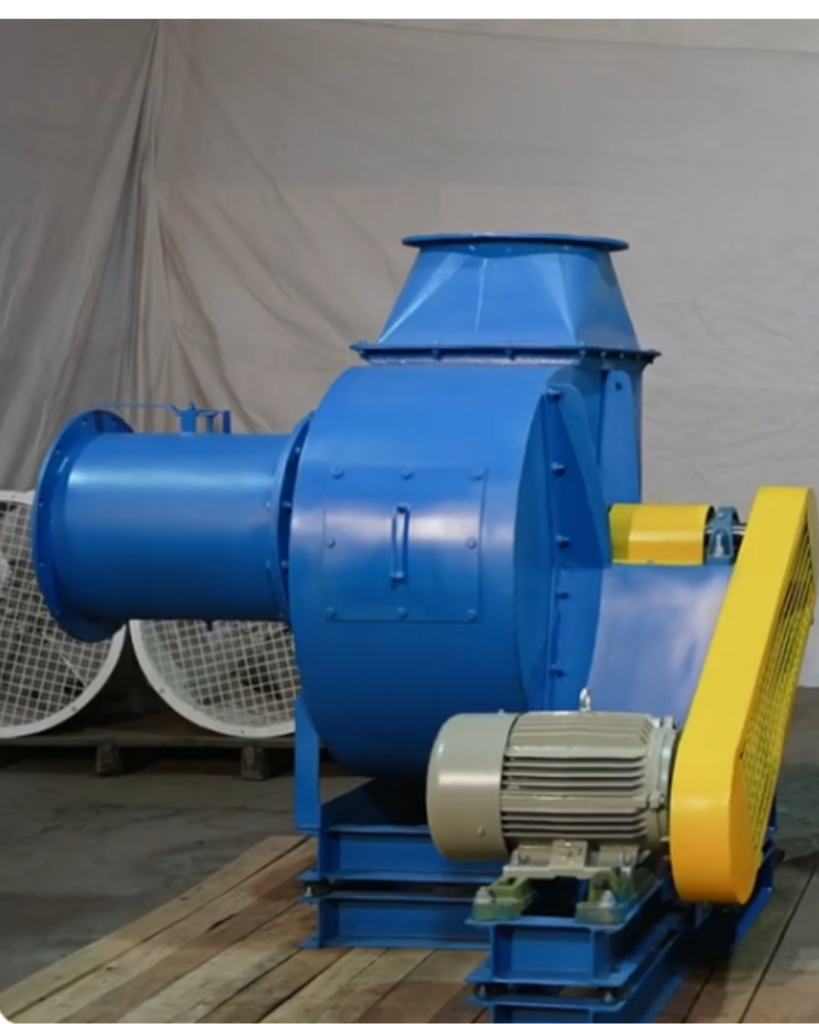
Centrifugal fans are the backbone of most cleanroom HVAC systems. They generate high static pressure, making them ideal for pushing air through dense HEPA/ULPA filter banks and long ductwork runs typical of pharmaceutical facilities.
2. Axial Fans
Axial fans are used primarily for general ventilation, exhaust, and cooling of non-critical areas such as utility rooms or warehouse spaces adjacent to production zones. They move large volumes of air efficiently but generate lower static pressure than centrifugal fans.
3. In-Line Duct Fans
Compact and space-saving, these are often used to boost airflow in ducted systems feeding cleanroom modules or laminar flow benches.
4. HEPA Fan Filter Units (FFUs)
A specialized fan-filter combination unit, FFUs are installed directly in cleanroom ceilings to deliver unidirectional (laminar) airflow over critical work zones, commonly used in ISO 5 and Grade A environments like aseptic filling lines.
5. Exhaust & Fume Extraction Fans
Used in areas handling potent compounds, solvents, or hazardous APIs, these fans (often corrosion-resistant or explosion-proof) safely remove contaminated air while maintaining negative pressure containment.
Key Selection Criteria for Pharma Industrial Fans
When specifying fans for pharmaceutical or cleanroom applications, consider the following:
Criteria | Why It Matters |
Static Pressure Capability | Must overcome resistance from HEPA filters, ducting, and dampers |
Airflow Volume (CFM/CMH) | Must meet ACH requirements for the room’s ISO/GMP classification |
Material of Construction | Stainless steel or coated housings resist corrosion from cleaning agents and fumigants |
Noise Levels (dB) | Cleanrooms and adjacent labs require low-vibration, low-noise operation |
Energy Efficiency | 24/7 operation makes energy consumption a major lifecycle cost factor |
Validation & Documentation | Fans must support IQ/OQ/PQ validation protocols with traceable performance data |
Redundancy & Fail-Safes | Critical zones often require backup fans or alarms to prevent classification breaches |
Compliance Standards
Pharmaceutical HVAC and fan systems are governed by a mix of international and regional standards, including:
- ISO 14644 – Cleanroom classification and testing
- EU GMP Annex 1 – Manufacture of sterile medicinal products
- WHO GMP Guidelines – Airflow and environmental monitoring for pharma facilities
- US FDA 21 CFR Part 211 – Current Good Manufacturing Practice for finished pharmaceuticals
- NFPA 91 / ATEX – Applicable when handling combustible dust or solvents requiring explosion-proof fan design
Choosing fans and HVAC components that are documented, validated, and traceable simplifies audits and regulatory inspections significantly.
Maintenance Best Practices
Because pharmaceutical facilities operate continuously and cannot tolerate airflow disruptions, a proactive maintenance strategy is essential:
- Scheduled filter and belt inspections to prevent pressure drop deviations
- Vibration and bearing monitoring to catch mechanical wear before failure
- Airflow verification testing (velocity and volume checks) as part of periodic requalification
- Preventive lubrication and cleaning using cleanroom-compatible agents
- Backup power integration to ensure fans restart automatically during outages
Choosing the Right Fan Supplier
Not all industrial fan manufacturers understand the nuances of pharmaceutical compliance. When evaluating suppliers, look for:
- Experience supplying GMP-compliant or cleanroom-rated equipment
- Ability to provide validation documentation (material certificates, performance curves, IQ/OQ support)
- Custom engineering capability for specific ACH, pressure cascade, or containment requirements
- Responsive after-sales service for a facility that cannot afford downtime
Final Thoughts
Industrial fans are foundational to maintaining cleanroom integrity, regulatory compliance, and product safety. From centrifugal fans driving HVAC systems to HEPA fan filter units delivering laminar airflow at the point of use, the right fan strategy protects both your product and your patients.
Investing in properly specified, well-maintained, and validated fan systems i’s a compliance necessity and a competitive advantage in an industry where quality cannot be compromised.
Looking to upgrade your facility’s cleanroom airflow systems? Consult with HVAC engineers who specialize in pharmaceutical and GMP-compliant environments to ensure your fans are correctly sized, validated, and ready for audit.