
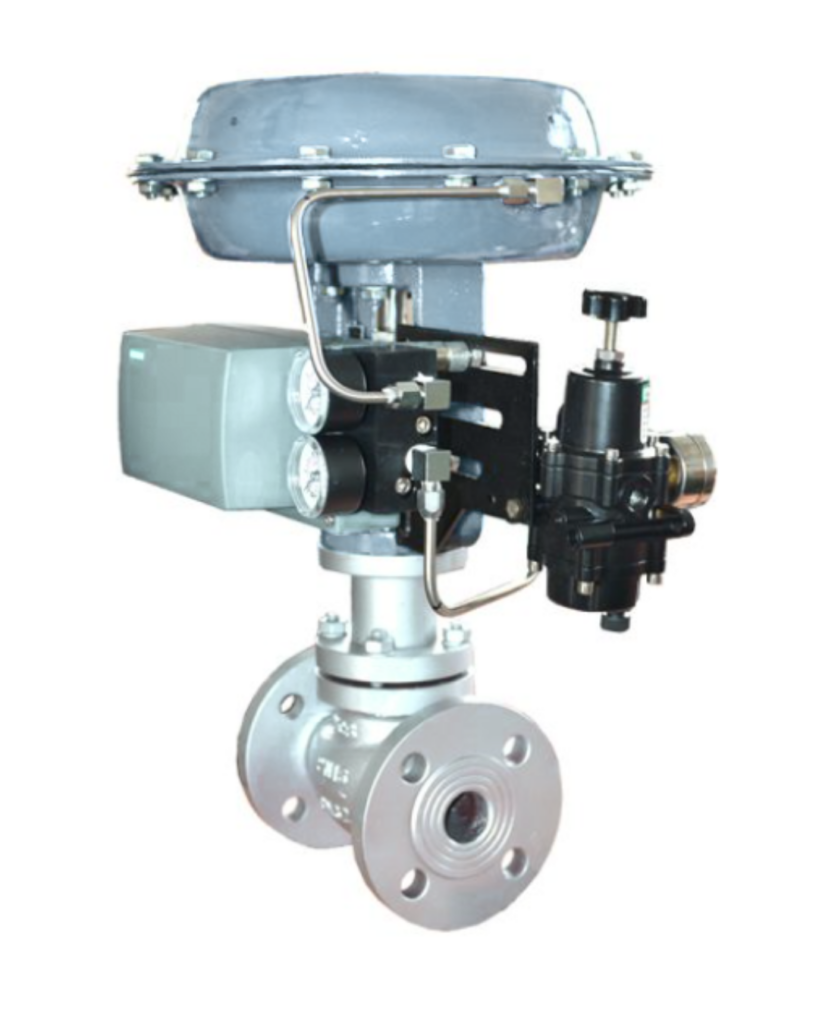
In crude oil heating and purification systems, maintaining accurate temperature control is essential for process efficiency, product quality, and equipment safety. One of the most critical components that enables this control is the 3-way electro-pneumatic valve. Installed within thermal fluid heater and heat exchanger circuits, these valves regulate the flow of thermal oil to ensure stable heating throughout the purification process.
Industries involved in edible oil refining, petrochemical processing, fuel treatment, and industrial oil purification rely heavily on controlled heat transfer. Any fluctuation in temperature can affect viscosity, separation efficiency, filtration quality, and overall production stability. This is where electro-pneumatic control technology becomes highly valuable.
What Is a 3-Way Electro Pneumatic Valve?
A 3-way electro-pneumatic valve is an automated flow control valve operated through a combination of electrical signals and pneumatic actuation. The valve receives a signal from a temperature controller or PLC system, while compressed air powers the actuator to position the valve accurately.
The valve typically performs one of two functions:
- Diverting Flow – directing thermal oil between different process paths
- Blending Flow – mixing hot and return thermal oil to maintain a desired temperature
In thermal fluid heating systems, this allows precise regulation of heat supplied to crude oil processing equipment.
Role in Crude Oil Heating Systems
Crude oil and heavy oils require controlled heating before purification and processing. Heating reduces viscosity, improves flow characteristics, and supports efficient removal of contaminants such as moisture, sludge, wax, and suspended particles.
A 3-way electro-pneumatic valve helps maintain this process by regulating thermal oil circulation between the thermal fluid heater and heat exchanger.
Temperature Regulation
The primary purpose of the valve is to maintain a consistent process temperature. If crude oil becomes overheated, product degradation or thermal cracking may occur. If the temperature is too low, the purification efficiency drops significantly.
The valve continuously adjusts thermal oil flow based on real-time temperature feedback, ensuring optimal heating conditions.
Integration With Thermal Fluid Heaters
Thermal fluid heaters are widely preferred in oil heating applications because they provide high temperatures without operating under extreme pressure like steam systems.
The 3-way electro pneumatic valve works alongside the thermal fluid heater by:
- controlling thermal oil supply to the heat exchanger
- diverting excess hot oil during low-demand conditions
- maintaining stable return temperatures
- preventing thermal shock to equipment
- improving overall energy efficiency
This controlled circulation ensures smooth operation of the heating loop under varying production loads.
Importance in Oil Purification Processes
During purification, crude oil passes through multiple stages that include heating, settling, filtration, centrifuging, and moisture removal. Each stage depends on maintaining specific temperature ranges.
The 3-way electro pneumatic valve supports these operations by enabling:
- Stable Viscosity Control- Maintaining proper temperature reduces oil viscosity, allowing easier pumping and improved filtration performance.
- Efficient Moisture Separation- Controlled heating assists in evaporating moisture and improving separation efficiency in purification systems.
- Better Heat Exchange Efficiency- By regulating thermal oil flow precisely, the valve improves heat transfer performance in shell-and-tube or plate heat exchangers.
- Process Automation-Electro-pneumatic systems integrate easily with PLCs and industrial automation systems, enabling automatic temperature correction without manual intervention.
Advantages of Electro-Pneumatic Operation
Electro-pneumatic actuation combines the responsiveness of pneumatic systems with the precision of electronic control.
Key advantages include:
- fast response time
- precise modulation capability
- reliable operation in industrial environments
- compatibility with automated control systems
- reduced manual adjustments
- improved process stability
Because compressed air powers the actuator, the system also remains suitable for hazardous industrial environments where electrical safety is important.
Why 3-Way Valves Are Preferred Over Conventional Valves
Unlike simple on-off valves, a 3-way electro-pneumatic valve provides continuous modulation. This allows gradual adjustment of thermal oil flow instead of abrupt temperature changes.
Benefits include:
- reduced thermal stress on pipelines and heat exchangers
- lower energy consumption
- improved equipment lifespan
- smoother process control
- consistent product quality
These advantages make the valve an essential component in modern crude oil heating and purification plants.
Industrial Applications
3-way electro pneumatic valves are widely used in:
- crude oil purification systems
- edible oil refining plants
- fuel oil heating systems
- bitumen heating applications
- thermal oil circulation systems
- industrial heat exchangers
- chemical process heating
- sludge oil recovery systems
Conclusion
The 3-way electro-pneumatic valve plays a vital role in crude oil heating and purification systems using thermal fluid heaters. By accurately controlling thermal oil circulation and maintaining stable process temperatures, the valve improves purification efficiency, energy performance, and operational reliability.
Its ability to integrate with automated industrial systems makes it an indispensable solution for industries requiring precise thermal management and uninterrupted process control.
Atmax Filtration Elements Inc supports industries with engineered solutions for industrial heating, thermal fluid circulation, process ventilation, and flow control applications. From assisting clients with process understanding and equipment selection to supporting industrial airflow, filtration, and system optimization requirements, the company works closely with industrial facilities to improve operational efficiency, process reliability, and energy performance. With experience across industrial manufacturing environments, Atmax helps businesses implement dependable engineering solutions tailored to demanding process conditions.