
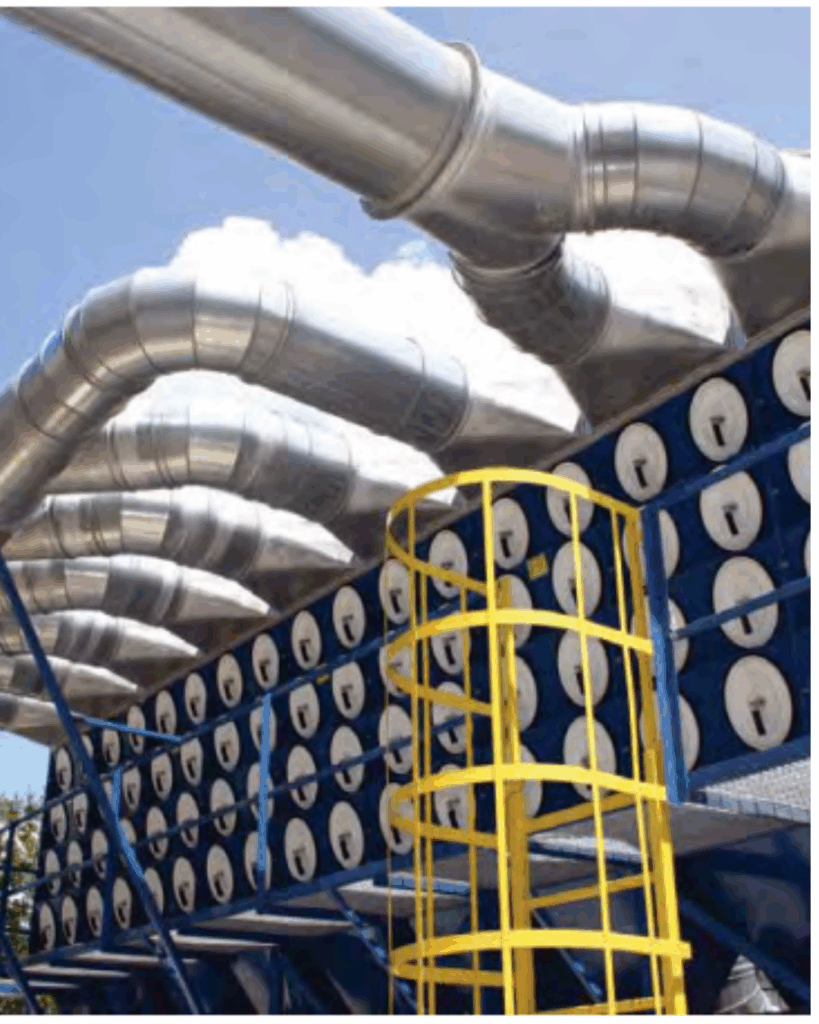
In every industrial facility from metal fabrication plants to woodworking shops maintaining clean indoor air isn’t just a safety requirement, it’s a performance driver. Poor air quality affects worker health, equipment reliability, and even product finish quality.
While source capture systems handle emissions at the point of origin, they often can’t address the background or “fugitive” dust that escapes into the broader workspace. That’s where ambient dust collection systems step in continuously filtering the overall air volume in a facility to maintain healthy, breathable conditions for everyone.
But here’s the catch: not all ambient systems are designed equally. Most installations only tackle surface-level dust removal, missing deeper opportunities to improve efficiency, safety, and compliance.
Let’s explore how ambient dust collection systems truly improve indoor air quality and the nine advanced strategies most competitors don’t talk about.
Why Ambient Dust Collectors Matter
Ambient air systems are designed to clean the entire air volume of a workspace not just the air immediately around a process.
Here’s how they help:
- Reduce Background Dust Concentration: They continuously filter fine and ultrafine particulates (PM10, PM2.5, etc.), lowering total suspended particulates throughout the workspace.
- Protect Workers Across the Floor: Even when processes change location, workers are safeguarded from residual airborne dust and fumes.
- Enhance HVAC Efficiency: Cleaner return air reduces filter loading, improves temperature consistency, and cuts down on HVAC energy costs.
- Simplify Compliance: Consistent background air quality supports OSHA, EPA, and ISO compliance — with measurable data to back it up.
The Problem With Most Ambient Systems
Many dust collector vendors stop at sizing and filter media selection leaving out design integration, airflow modeling, and sensor feedback.
An effective ambient system isn’t just about installing filters and fans. It’s about airflow balance, zoning, data monitoring, and proactive maintenance the very factors that determine real-world air quality.
Strategies to Maximize Air Quality
1️⃣ Combine Ambient Filtration with Source Capture
Ambient systems and source capture units aren’t competitors they’re teammates.
Use hybrid systems: local hoods for heavy emission points and ambient units for the background air. This balance reduces overall CFM demand, energy consumption, and airborne contaminant buildup.
2️⃣ Use Continuous Dust Monitoring for Smart Control
Real-time sensors tracking PM2.5, PM10, and TSP can adjust system operation automatically.
When dust levels rise, fans ramp up; when the air is clean, systems slow down saving energy and extending filter life.
3️⃣ Optimize Layout with CFD Airflow Simulation
Installing collectors based only on square footage leads to “dead zones” and recirculation.
CFD (Computational Fluid Dynamics) modeling helps visualize airflow and dust dispersion, ensuring every corner gets effective air cleaning.
4️⃣ Apply Filter Staging for Efficiency
Use multi-stage filtration prefilters, main filters (MERV 13–16), and optional HEPA or activated carbon after-filters.
This approach captures both large and fine particulates while extending cartridge life and reducing operational costs.
5️⃣ Balance Airflow with Proper Make-Up Air
High air extraction without make-up air creates negative pressure pulling in outdoor dust or fumes.
Integrate make-up air units (MUAs) or filtered recirculation to maintain equilibrium, comfort, and energy savings.
6️⃣ Integrate Combustible Dust Safety Features
If your facility handles wood, metal, or grain dust, explosion risks are real.
Include spark arrestors, explosion vents, and isolation valves in your ambient system. It’s not optional, it’s part of NFPA compliance and long-term insurance safety.
7️⃣ Prevent Dust Re-Entrapment
Collected dust shouldn’t re-enter your workspace.
Seal rotary airlocks and transfer points properly, and ensure discharge systems are airtight to avoid secondary contamination.
8️⃣ Switch to Predictive Maintenance
Go beyond fixed schedules use differential pressure sensors, pulse counts, and runtime analytics to predict filter wear.
This data-driven approach reduces downtime, avoids surprises, and ensures consistent IAQ performance.
9️⃣ Make IAQ Data Auditable and Actionable
Your ambient system should do more than clean air it should produce measurable proof.
Integrate IAQ dashboards that log particle counts, temperature, and airflow data. These records support EHS compliance and process optimization.
Implementation Checklist
Here’s a simplified roadmap to designing or auditing your ambient air system:
- Map emission points and worker zones.
- Measure baseline PM2.5 and PM10 levels.
- Calculate required Clean Air Delivery Rate (CADR).
- Use CFD simulation for equipment placement.
- Select proper filtration stages.
- Plan for make-up air and energy recovery.
- Integrate combustible dust protection.
- Set up continuous monitoring and dashboards.
- Train operators on safe maintenance practices.
ROI Insight: How Clean Air Pays for Itself
An optimized ambient system provides measurable savings:
- Lower absenteeism due to better air quality.
- Reduced downtime from equipment contamination.
- Lower HVAC and filter replacement costs.
- Regulatory compliance that prevents costly fines.
Use this formula for a quick estimate:
ROI (%) = (Annual Savings − Annual Cost) / Annual Cost × 100
Track energy use, PM data, and filter life before and after installation to show tangible improvement.
Common Pitfalls to Avoid
- Installing collectors without airflow studies.
- Ignoring make-up air requirements.
- Using incorrect filter media for your dust type.
- Neglecting explosion protection where needed.
- Operating systems without real-time data feedback.
Final Thoughts
Ambient dust collection systems aren’t just about cleaner air they’re about smarter, safer, and more sustainable industrial operations.
When paired with airflow optimization, predictive maintenance, and real-time monitoring, these systems go beyond compliance they become a competitive advantage.
At Atmax Filtration, we specialize in designing integrated ambient and general ventilation systems that improve IAQ, reduce operating costs, and protect your workforce and equipment.
If you’re looking to upgrade or troubleshoot your current setup, our engineers can audit, simulate, and optimize your system for maximum performance and ROI.