
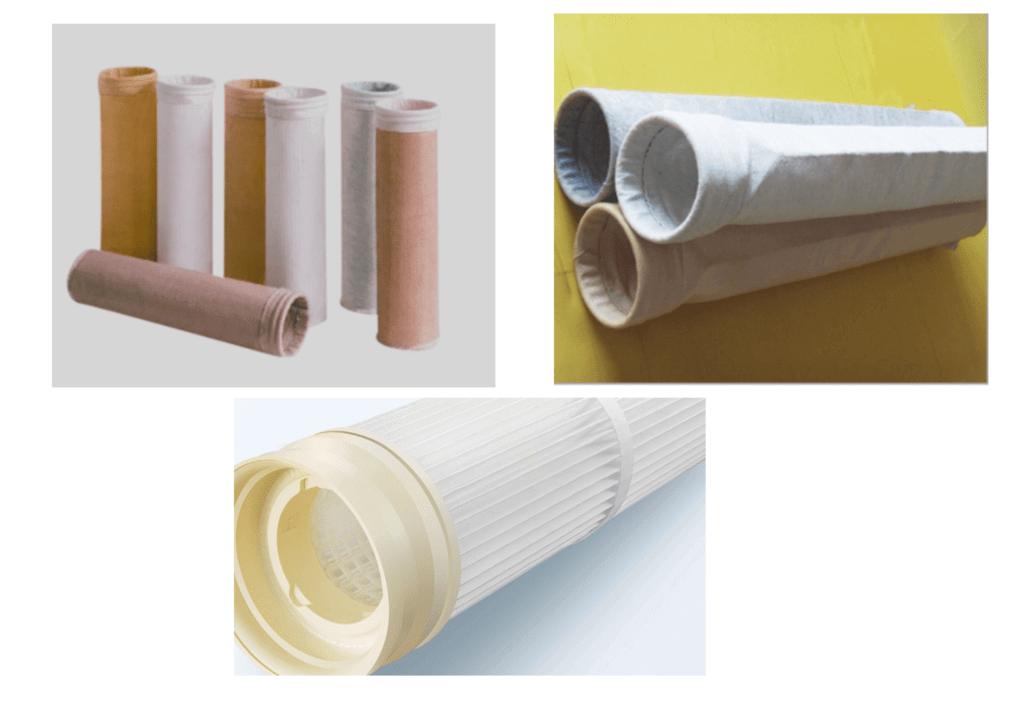
In many industrial dust collection systems, filtration performance determines everything from air quality, energy consumption, maintenance frequency, and overall operational reliability. One method sometimes used to boost cartridge performance is pre-coating, where a layer of porous material is applied to new filter media. While this can offer temporary benefits, Atmax Filtration’s field experience shows that it is rarely the most effective long-term strategy for modern facilities.
Below is a balanced look at where pre-coating helps, where it complicates operations, and why advanced fine-fiber filter technologies are now the preferred approach for customers relying on Atmax systems and services.
Why Pre-Coating Is Used in Dust Collection
Pre-coating is typically applied for two reasons:
1. To Improve Initial Filtration Efficiency
New cellulose or cellulose-blend cartridges often have low initial efficiency on fine particulate. Pre-coating adds an artificial dust cake that
- Captures sub-micron particles sooner
- Improves initial system efficiency
- Reduces early dust penetration into the substrate
However, this comes at the cost of:
- Higher initial pressure drop
- Increased fan energy consumption
- Added material and labor expense
- Additional waste handling
Most importantly, pulse-cleaning removes the pre-coat, causing performance to drop back to the baseline.
2. To Delay Filter Plugging
In theory, pre-coating prevents fine particles from reaching the media, slowing depth loading. But in practice, the benefit doesn’t last. Once the cartridge receives a few cleaning pulses, the pre-coat layer dissipates and the filter begins loading normally again.
This is why Atmax Filtration typically recommends pre-coating only in very specific short-term scenarios, not as a primary filtration enhancement method.
A More Effective Approach: Premium Fine-Fiber Cartridges
Rather than applying a temporary coating, modern dust collectors gain far greater stability and efficiency from premium-grade media with a permanent fine-fiber surface layer.
Atmax Filtration supplies and integrates cartridges that use advanced fine-fiber structures engineered to stay intact through the filter’s entire operating life.
Why Fine-Fiber Media Performs Better
✔ Higher initial and ongoing efficiency
Fine fibers (typically ~0.3 microns in diameter) create a permanent surface-level filtration matrix. A new fine-fiber cartridge usually delivers 65% or higher initial sub-micron efficiency, climbing quickly above 90% with light loading—without the airflow restriction caused by pre-coating.
✔ Better pulse-cleaning results
Because dust remains on the surface, it is easily removed during pulsing. This protects the substrate and dramatically slows depth loading.
✔ Lower pressure drop, longer life
Fine-fiber filters consistently operate with lower resistance, reducing:
- Fan horsepower draw
- Compressed air usage
- Frequency of filter changeouts
This is where customers working with Atmax see some of the clearest long-term operating cost reductions.
✔ More stable, predictable performance
Unlike pre-coating which resets every time the filter is cleaned, fine-fiber media maintains consistent efficiency and cleanability throughout its life.
Conclusion
Conclusion
Pre-coating can temporarily enhance filtration efficiency, but it also:
- Increases pressure drop
- Raises energy costs
- Requires additional handling
- Loses effectiveness after pulse cleaning
For most facilities, especially those focused on long-term efficiency and system reliability, fine-fiber filter cartridges offer a far stronger and more economical solution. Atmax Filtration continues to help industrial plants optimize performance by specifying advanced media that delivers cleaner air, longer filter life, and measurable energy savings.