
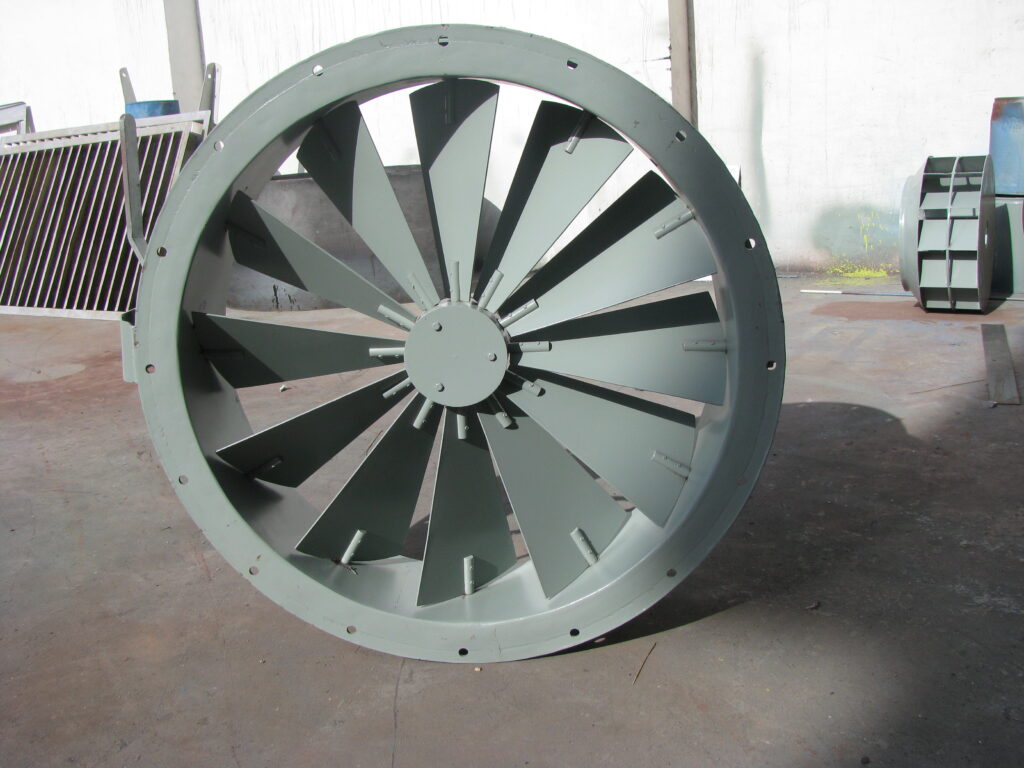
Industrial ventilation systems are the backbone of safe, productive facilities. Whether in chemical plants, automotive manufacturing, or dust-heavy industries, the correct selection of fans directly impacts efficiency, safety, and operating costs.
Yet, one of the most common pitfalls in system design is misinterpreting or completely overlooking fan curves. The result? Oversized or undersized fans that waste energy, deliver poor airflow, and shorten equipment lifespan.
Understanding fan curves and how they interact with system resistance is essential for engineers and plant managers. In this guide, we’ll break down the science behind fan curves and provide practical tips to ensure you match your industrial fan to your system’s needs with precision.
What is a Fan Curve?
A fan curve is a performance graph provided by the manufacturer that illustrates how a fan performs under varying conditions. It’s essentially the fan’s “fingerprint,” showing how airflow (volume) changes with resistance (pressure).
Typical elements on a fan curve include:
- Airflow (CFM or m³/hr): The volume of air moved by the fan.
- Static Pressure (SP, in. w.g. or Pa): Resistance the fan must overcome in the system.
- Brake Horsepower (BHP): The power required to drive the fan at specific conditions.
- Efficiency Curve: Indicates the fan’s peak efficiency operating range.
- Noise Levels (sometimes included): Sound data under operating conditions.
Note: Reading a fan curve is not optional, it’s the foundation of correct fan selection.
Understanding System Resistance
Every ventilation system presents resistance to airflow, caused by ductwork, elbows, filters, dampers, dust collectors, and other components. This is known as the system resistance curve.
Key characteristics:
- Resistance increases with the square of airflow.
- More airflow = more pressure drop.
- System resistance is not a straight line it’s a parabola.
When you overlay a fan curve with a system resistance curve, the intersection point defines the operating point of the system. This point determines the actual airflow and pressure your system will achieve.
Tip: Always calculate system resistance accurately. A small error in resistance assumptions can shift the operating point drastically.
How to Read a Fan Curve Correctly
Many fan misapplications happen because engineers skip or misread the curve. Here’s a structured way to approach it:
- Determine System Requirements
- Required airflow (e.g., 20,000 CFM).
- Total static pressure (e.g., 6 in. w.g.) including duct losses, filters, and process equipment.
- Locate the Intersection
- Find the point where required airflow intersects with the static pressure line on the fan curve.
- Find the point where required airflow intersects with the static pressure line on the fan curve.
- Check Horsepower and Efficiency
- Ensure the motor selected can handle the required BHP.
- Stay within the fan’s peak efficiency range for energy savings.
- Consider Noise and Safety Margins
- Avoid operating near stall or surge regions.
- Leave a safety margin for filter loading or duct modifications.
- Avoid Common Mistakes
- Oversizing: Choosing a fan that’s too large, leading to wasted energy and turbulence.
- Undersizing: Fan cannot overcome resistance, resulting in inadequate airflow.
Ignoring system changes: Filters clog, ducts age—resistance rises over time.
Matching Fans to System Resistance
The art of fan selection is finding the sweet spot between fan performance and system demand.
1. Oversized Fan
- Wastes horsepower.
- Creates excessive noise and turbulence.
- Requires throttling dampers, which further waste energy.
2.Undersized Fan
- Delivers insufficient airflow.
- Can’t maintain required pressure for dust collectors or fume capture.
- Causes overheating in process equipment.
3. Correctly Sized Fan
- Matches fan curve to system resistance curve.
- Operates near peak efficiency.
- Maintains airflow even as filter load or duct resistance increases.
Remember: The fan curve and system curve must intersect in the right efficiency zone that’s where performance, safety, and cost savings align.
Fan Curves and Energy Efficiency
Fans are often among the largest energy consumers in industrial facilities. A poorly matched fan can cost thousands of dollars in wasted energy every year.
Brake Horsepower (BHP) and Efficiency
- Brake Horsepower (BHP): The actual power consumed by the fan.
- Running outside the efficient range drastically increases BHP requirements.
- Fans operating at their sweet spot consume 20–30% less energy.
Practical Tips for Engineers and Plant Managers
- Always Request Fan Curves
- Don’t rely on catalog CFM ratings alone. Insist on detailed fan curve data.
- Don’t rely on catalog CFM ratings alone. Insist on detailed fan curve data.
- Verify with AMCA Certified Data
- Only trust performance curves tested to AMCA standards for reliability.
- Only trust performance curves tested to AMCA standards for reliability.
- Account for System Changes
- Filters clog. Ductwork ages. Build-in margins for increasing resistance over time.
- Filters clog. Ductwork ages. Build-in margins for increasing resistance over time.
- Use VFDs (Variable Frequency Drives)
- Allows dynamic fan adjustments as resistance changes, maintaining optimal efficiency.
- Allows dynamic fan adjustments as resistance changes, maintaining optimal efficiency.
- Monitor System Performance
- Install sensors for static pressure and airflow.
- Use vibration monitoring to detect impeller imbalance.
- Track energy consumption to identify drift from the operating point.
Conclusion
Fan curves are not just technical graphs they are the roadmap to building safe, efficient, and reliable ventilation systems. By understanding how fan curves interact with system resistance, engineers can:
- Avoid costly oversizing or undersizing errors.
- Reduce energy consumption.
- Improve system reliability and worker safety.
Atmax Filtration specializes in industrial fan selection, system resistance analysis, and performance optimization. Whether you need a centrifugal fan for a dust collector or an FRP fan for a corrosive environment, the right match ensures your system runs at peak performance.