
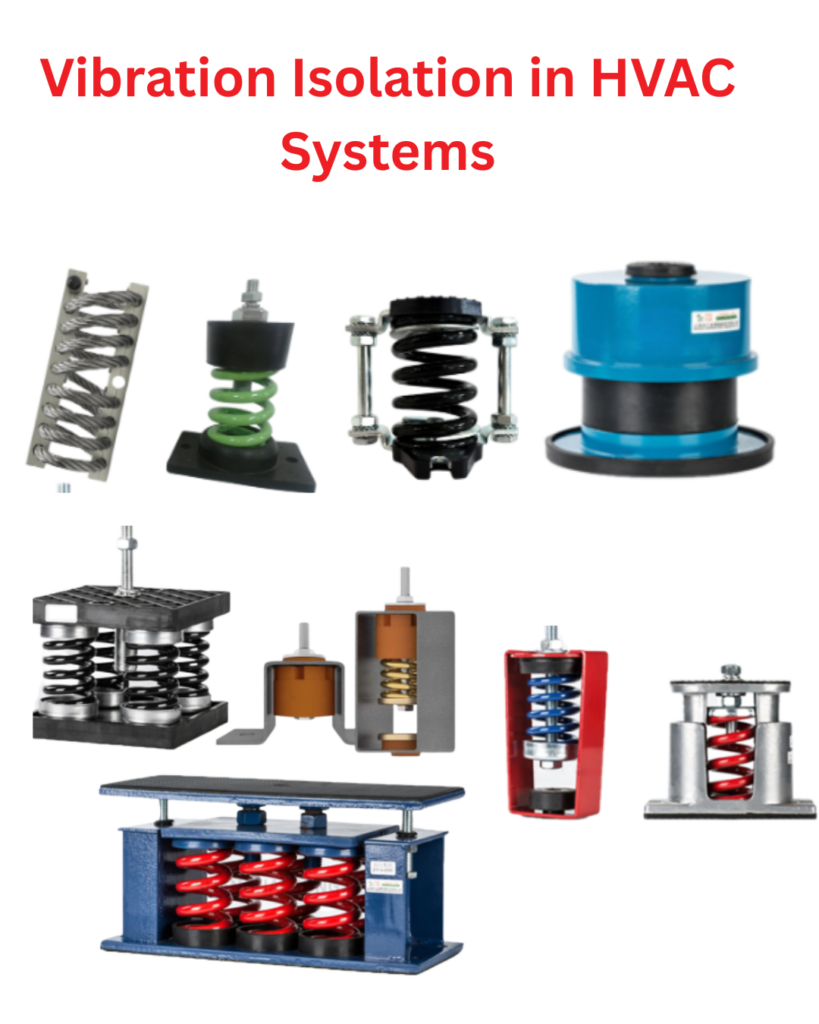
Modern HVAC and industrial ventilation systems are expected to operate efficiently, reliably, and quietly. Yet, one critical aspect often overlooked is vibration control. Equipment such as air handling units, chillers, pumps, and fans continuously generate vibrations that can travel through structures, ductwork, and piping systems, leading to excessive noise, equipment wear, and increased maintenance costs.
Vibration isolators serve as the silent protectors of HVAC systems by absorbing and dampening mechanical energy before it reaches the building structure. Whether through spring isolators, neoprene pads, or hanger isolators, these components help enhance occupant comfort, extend equipment life, and improve overall system performance. At Atmax Filtration Elements Inc., we believe that effective vibration isolation is an essential part of designing efficient, reliable, and long-lasting HVAC systems.
Why Vibration Isolation Matters in HVAC Systems
Mechanical equipment contains rotating and moving components such as motors, fans, compressors, and pumps. These components create dynamic forces that generate vibrations.
If left uncontrolled, these vibrations can lead to:
- Excessive operational noise
- Transmission of sound through floors, walls, and ceilings
- Premature wear of bearings, motors, and fan assemblies
- Loosening of duct connections and piping supports
- Increased maintenance costs
- Structural fatigue in buildings
- Reduced system reliability and performance
Properly designed vibration isolation systems minimize these issues, contributing to improved energy efficiency, enhanced occupant comfort, and longer equipment service life.
How Vibration Isolators Work
Vibration isolators are engineered to absorb, dissipate, and dampen mechanical energy before it is transmitted to surrounding structures.
Their primary functions include:
- Reducing vibration transmission
- Minimizing airborne and structure-borne noise
- Protecting equipment from excessive stress
- Improving system stability
- Extending equipment lifespan
The selection of an isolator depends on several engineering factors, including:
- Equipment operating speed
- Weight and load distribution
- Excitation frequency
- Installation location
- Environmental conditions
- Required isolation efficiency
A properly selected isolation system ensures smooth operation and significantly reduces maintenance concerns.
Types of Vibration Isolators Used in HVAC Applications
1.Spring Isolators
Spring isolators are highly effective for controlling low-frequency vibrations generated by heavy rotating equipment.
They are commonly installed beneath:
- Air Handling Units (AHUs)
- Chillers
- Cooling towers
- Large centrifugal fans
- Industrial blowers
- Pumps
- Compressors
Spring isolators provide excellent isolation efficiency, particularly in applications where vibration frequencies are close to structural resonance frequencies.
2. Rubber and Neoprene Isolators
Rubber and neoprene pads are widely used for equipment producing high-frequency vibrations.
These isolators are ideal for:
- Small pumps
- Package HVAC units
- Exhaust fans
- Inline fans
- Rooftop equipment
- Split system components
Benefits include:
- Cost-effectiveness
- Ease of installation
- Corrosion resistance
- Minimal maintenance requirements
Their inherent damping characteristics make them highly effective in reducing noise transmission.
3.Hanger Isolators
Suspended systems can also become pathways for vibration transfer.
Hanger isolators are designed specifically for:
- Suspended ductwork
- HVAC piping systems
- Exhaust duct systems
- Mechanical room ceiling supports
By isolating suspended assemblies, these devices prevent vibration transmission into occupied spaces, ensuring quieter building environments.
Benefits of Proper HVAC Vibration Isolation
An effective vibration isolation strategy delivers numerous operational advantages.
1.Improved Occupant Comfort- Excessive noise can negatively impact employee productivity, patient recovery, educational environments, and customer experiences.
Isolation systems significantly reduce noise levels, creating comfortable indoor spaces.
2.Increased Equipment Life- Continuous vibration accelerates wear on mechanical components. Proper isolation reduces stress on:
- Bearings
- Motors
- Shafts
- Fan assemblies
- Structural supports
This translates into fewer failures and longer equipment service intervals.
3.Reduced Maintenance Costs- Lower vibration levels help minimize unexpected breakdowns, reducing repair expenses and downtime. Facilities benefit from:
- Fewer component replacements
- Improved operational reliability
- Lower lifecycle costs.
Protection of Building Structures- Over time, persistent vibration can contribute to cracks, fatigue, and deterioration in structural elements. Isolation systems protect:
- Floors
- Ceilings
- Mechanical supports
- Wall assemblies
- Equipment foundations.
4.Enhanced System Efficiency- Stable equipment operation contributes to better airflow performance, reduced energy losses, and improved overall HVAC efficiency.
Key Factors in Selecting Vibration Isolators
Successful vibration control begins with proper engineering analysis. Design professionals typically evaluate:
Selection Parameter | Considerations |
Equipment Weight | Static and dynamic loading |
Operating Frequency | RPM and vibration characteristics |
Isolation Efficiency | Desired noise reduction level |
Mounting Conditions | Floor-mounted or suspended |
Environmental Exposure | Moisture, chemicals, outdoor conditions |
Space Availability | Installation constraints |
Choosing the correct isolator type ensures optimal performance throughout the equipment’s operational life.
Vibration Isolation in Industrial Ventilation Systems
Industrial facilities often experience even greater vibration challenges due to larger airflow volumes and heavier equipment.
Applications include:
- Dust collection systems
- Baghouse collectors
- Centrifugal fans
- Induced draft fans
- Forced draft fans
- Cyclone separators
- Process exhaust systems
- Commercial kitchen ventilation systems
Atmax Filtration Elements Inc. incorporates vibration management principles into ventilation system design to enhance operational stability, improve workplace comfort, and maximize equipment longevity
In modern HVAC and industrial ventilation systems, effective vibration control remains one of the most valuable yet least visible engineering solutions.Whether your project involves commercial buildings, manufacturing facilities, processing plants, or industrial ventilation upgrades, incorporating proper vibration isolation strategies can significantly improve system performance and lifecycle value.