
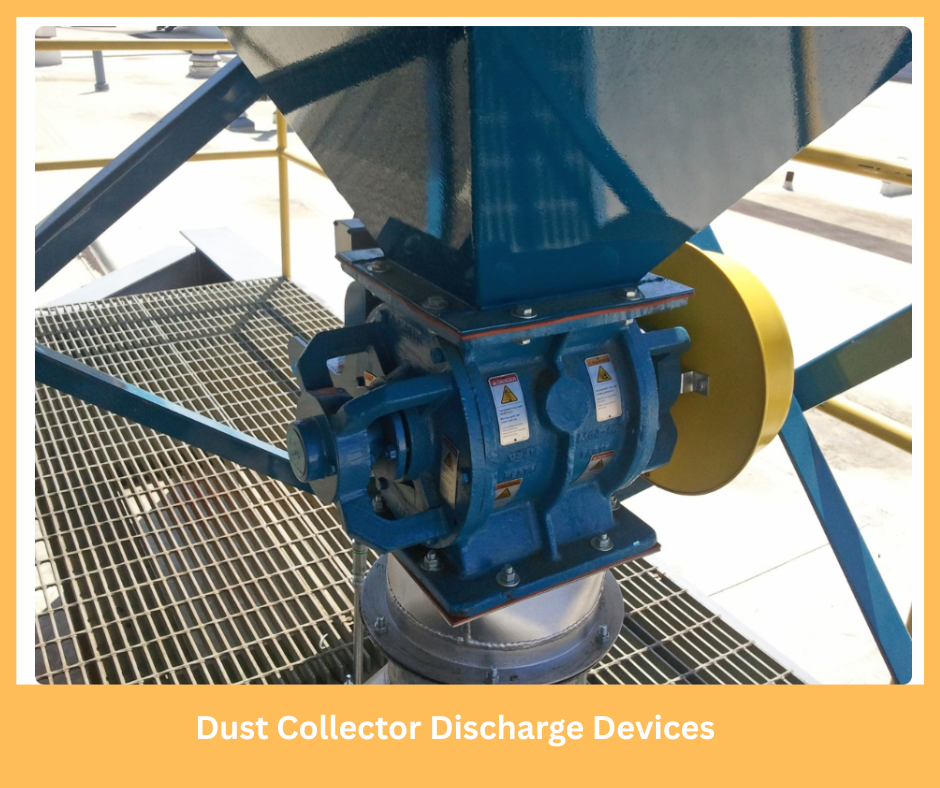
In many industrial facilities, dust collector performance issues are quickly blamed on filters. While filters are important, Atmax Filtration often sees a different root cause during system inspections, uncontrolled upward airflow caused by poor discharge sealing.
This issue starts at the bottom of the dust collector but affects the entire system.
What Causes Upward Airflow in Dust Collectors?
A dust collector is designed so that heavier dust settles into the hopper while finer particles are captured on the filters. The discharge device plays a critical role in this process by allowing collected dust to exit the system while maintaining an air-tight seal.
When that seal fails, outside air is pulled into the collector from below. This creates upward airflow inside the unit, disrupting normal dust separation and pulling fine particles back into the filter zone.
This process is known as dust re-entrainment, and it is one of the most common reasons for rising differential pressure and shortened filter life.
Why Dust Re-Entrapment Damages System Performance
Our engineers frequently encounter systems where filters are replaced repeatedly without solving the underlying airflow issue.
Upward airflow causes fine dust to be re-deposited on the filters instead of settling into the hopper. As a result, filters load faster and require more frequent pulse cleaning.
Over time, this leads to increased differential pressure, higher compressed air usage, and accelerated filter wear. In severe cases, airflow from the process itself is reduced, meaning dust is no longer captured effectively at the source.
The system may appear to be running normally, but efficiency and reliability quietly decline.
Discharge Devices and Their Impact on Air Sealing
Most industrial dust collectors use either drum discharge systems or rotary valves. Both rely entirely on maintaining an effective air seal.
Drum Discharge Systems
A typical drum discharge setup uses a 55-gallon drum connected to the hopper with a flexible hose. While simple, this arrangement is vulnerable to air leaks if not maintained properly.
Flexible hoses can loosen, crack, or wear through over time. Even small holes allow air to be pulled upward into the collector.
Drum lids and gaskets are another common failure point. Bent lids or worn gaskets prevent a proper seal and should never be ignored.
The drum itself is often the most overlooked component. Dented or out-of-round drums cannot seal evenly against the lid, allowing continuous air leakage that contributes directly to dust re-entrainment.
Atmax recommends routine inspection of all drum discharge components, especially in high-dust or abrasive applications.
Rotary Valves and Airlocks
Rotary valves are designed to discharge dust while preventing outside air from entering the collector. When functioning correctly, they are one of the most effective ways to control upward airflow.
Rubber wiper rotary valves require regular inspection. Worn, torn, or missing wipers create leakage paths that compromise the air seal.
Machined rotor rotary valves depend on precise rotor tip to housing clearances. If these clearances exceed manufacturer recommendations, excessive air leakage occurs. This condition often goes unnoticed until filter life drops significantly.
Atmax Filtration emphasizes proper rotary valve selection, installation, and maintenance as part of a complete dust collection solution.
Screw Conveyors and Secondary Air Leakage
Dust collection systems that include screw conveyors downstream of the hopper introduce additional sealing challenges.
Inspection covers must be properly gasketed to maintain air tightness. Bent covers or missing gaskets allow air to enter the system and contribute to upward airflow inside the collector.
Flat conveyor surfaces can also collect rainwater. Water entering the conveyor can cause material buildup, plugging, and unplanned downtime. During inspections, any air whistling noises should be treated as a clear warning sign of leakage.
How to Prevent Dust Re-Entrapment
Preventing upward airflow requires attention to detail. Atmax Filtration recommends routine inspection of discharge hoses, drum lids, gaskets, and drums. Components showing wear or deformation should be replaced rather than temporarily repaired.
Rotary valves should be inspected on a scheduled basis, with damaged wipers replaced promptly and rotor clearances monitored closely.
Screw conveyor covers must remain flat, sealed, and gasketed to maintain both air and water tightness.
By addressing these areas proactively, facilities can significantly reduce differential pressure, extend filter life, and improve overall dust collection efficiency.
A Bottom-Up Approach to Better Dust Collection
Upward airflow problems rarely cause sudden failures. Instead, they quietly reduce performance, increase operating costs, and shorten equipment life.
Atmax Filtration takes a bottom-up approach to dust collection system performance, ensuring that discharge devices, air sealing, and material handling components work together as a complete system.
Paying attention to what happens at the bottom of the dust collector is one of the most effective ways to protect filters, maintain airflow, and keep industrial operations running clean and efficient.