
Industries such as petrochemicals, edible oil refining, pharmaceuticals, specialty chemicals, and industrial manufacturing rely on thermic fluid heating systems to maintain stable process temperatures, improve energy efficiency, and support continuous production.
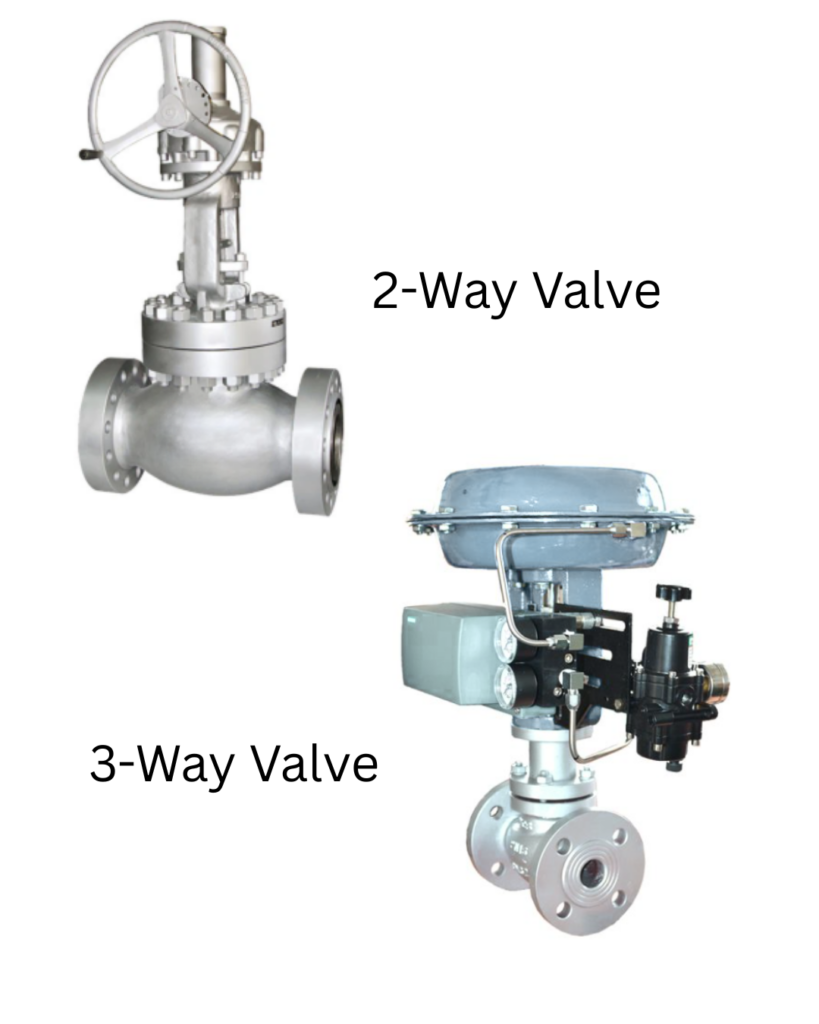
At the core of these systems lies an essential flow control component, the control valve. Among the most widely used configurations are 2-way control valves and 3-way control valves. While both are designed to regulate thermal fluid flow, their operating principles, system behavior, and process impact differ significantly.
Selecting the appropriate valve configuration is crucial for achieving stable circulation, accurate temperature control, optimized energy consumption, and long-term equipment reliability.
Role of Control Valves in Thermal Oil Systems
Control valves are designed to regulate the flow of thermal oil through heat exchangers, reactors, pipelines, and process equipment. Integrated with temperature controllers and automation systems, these valves continuously adjust fluid flow to maintain desired process conditions.
In thermal fluid heater systems, control valves contribute to:
- precise process temperature regulation
- efficient thermal oil circulation
- improved heat transfer performance
- enhanced system stability
- reduced energy consumption
- equipment protection and operational reliability
The primary distinction between 2-way and 3-way valves lies in how they manage fluid flow within the heating circuit.
What Is a 2-Way Control Valve?
A 2-way control valve consists of one inlet and one outlet, controlling flow through a single pathway. Its primary function is to modulate the volume of thermal oil entering a process line or heat exchanger based on system demand.
As the valve opens or closes, the flow rate increases or decreases accordingly, allowing temperature control through variable flow regulation.
Advantages of 2-Way Control Valves
- Simplified Design – The straightforward construction of 2-way valves makes them relatively easy to install, operate, and maintain.
- Cost-Effective Solution – For basic heating applications, 2-way valves offer an economical flow control option with lower installation costs.
- Effective Modulating Capability – These valves provide reliable flow regulation in systems where variable circulation does not negatively impact thermal performance.
Limitations of 2-Way Control Valves in Thermal Oil Systems
While suitable for certain applications, 2-way valves can create operational limitations in dynamic thermal oil systems.
Variable Thermal Oil Circulation- As the valve restricts flow, thermal oil circulation throughout the system decreases. This can affect heat transfer consistency, pump performance, process stability and overall system efficiency.
Pressure Fluctuation-Flow restriction may result in pressure variations within the circulation loop, impacting operational stability.
- Increased Thermal Stress-Abrupt changes in thermal oil flow can create uneven temperature distribution, increasing the risk of thermal shock to equipment.
What Is a 3-Way Control Valve?
A 3-way control valve incorporates three ports and is designed for either blending or diverting fluid flow. Unlike 2-way valves, 3-way valves maintain continuous thermal oil circulation while regulating process temperature.
Depending on system design, the valve can:
- blend hot supply oil with cooler return oil
- divert thermal oil between process equipment and bypass lines
This configuration enables more stable thermal management across varying operating conditions.
Operating Principle of 3-Way Control Valves
Blending Configuration- In blending applications, the valve combines hot thermal oil with return oil to achieve a precise outlet temperature before entering the process.
Diverting Configuration-In diverting applications, the valve redirects thermal oil flow between the process circuit and a bypass line depending on heating demand.
Both configurations ensure continuous circulation and smoother thermal regulation.
Advantages of 3-Way Control Valves in Thermal Oil Systems
Continuous Fluid Circulation- 3-way valves maintain stable thermal oil flow throughout the system, even during reduced heating demand.
Superior Temperature Stability- Gradual modulation minimizes sudden temperature fluctuations, supporting consistent process performance.
Reduced Thermal Shock- Continuous circulation protects critical equipment such as: heat exchangers, reactors, pumps, piping systems from excessive thermal stress.
Improved Energy Efficiency- Optimized thermal oil management enhances heat transfer efficiency while reducing unnecessary energy consumption.
Enhanced System Reliability- Stable operating conditions contribute to lower maintenance requirements and extended equipment life.
Key Differences Between 2-Way and 3-Way Control Valves
Parameter | 2-Way Control Valve | 3-Way Control Valve |
Flow Configuration | Single flow path | Blending or diverting flow |
Thermal Oil Circulation | Variable | Continuous |
Temperature Stability | Moderate | High |
Pressure Stability | May fluctuate | More stable |
Thermal Shock Protection | Limited | Excellent |
System Complexity | Simpler | More advanced |
Energy Optimization | Suitable for basic systems | Ideal for dynamic systems |
Application Suitability | Standard flow control | Precision thermal management |
Which Valve Configuration Is Best for Thermal Oil Systems?
The selection depends on process requirements, system complexity, and operational objectives.
2-Way Control Valves Are Commonly Used In:
- simple heating circuits
- low-load variation systems
- smaller thermal oil applications
- budget-sensitive installations
3-Way Control Valves Are Preferred In
- thermic fluid heater systems
- continuous industrial processes
- heat exchanger applications
- crude oil heating and purification systems
- temperature-sensitive manufacturing operations
- systems requiring stable thermal circulation
In advanced thermal oil systems, 3-way control valves are generally preferred due to their ability to provide stable flow management, precise temperature control, and improved operational reliability.
Industrial Applications
Both 2-way and 3-way control valves are widely used across industries including:
- petrochemical processing
- edible oil refining
- chemical manufacturing
- pharmaceutical production
- industrial heat exchangers
- thermal fluid heating systems
- crude oil processing facilities
However, 3-way control valves are typically selected for applications requiring greater thermal precision and process stability.
Conclusion
Both 2-way and 3-way control valves serve important functions in thermal oil systems, yet their operational characteristics and system impact differ considerably. While 2-way valves provide a practical solution for basic flow regulation, 3-way control valves offer superior temperature stability, continuous circulation, enhanced energy efficiency, and improved equipment protection.
For industries operating complex thermic fluid heating systems, selecting the appropriate control valve configuration is essential for achieving long-term operational reliability, process optimization, and energy-efficient performance.
Atmax Filtration Elements Inc supports industrial clients with engineered solutions for thermal fluid systems, industrial ventilation, process optimization, and flow management applications. Through technical expertise and industry-focused engineering support, the company helps businesses improve operational efficiency, process reliability, and overall system performance in demanding industrial environments.