
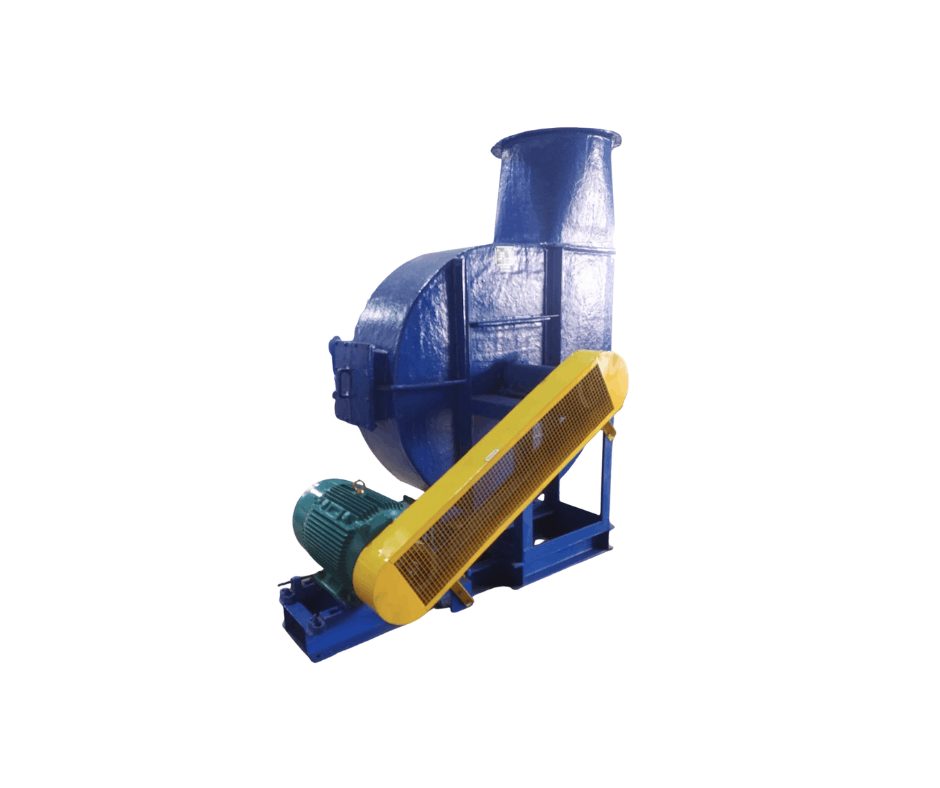
Paint Booth, Plating and Pickling Exhaust Fans
If you have ever swapped out a corroded fan in a plating shop, or lost a weekend to a paint-booth airflow problem, you know the exhaust system is not a background detail. It decides whether your people breathe clean air, whether your finish comes out right, and in a spray booth, whether a solvent-laden atmosphere stays below the point where it can ignite.
Paint booths, plating lines and pickling tanks all need exhaust fans, but they are three different jobs. A fan that is perfect for one can fail fast, or be unsafe, in another. This guide walks through what each process puts into the air, which fan features matter, and how to specify a fan that lasts.
Three processes, three different problems
Process | What the fan has to handle | Biggest risk | Priority when choosing |
Paint booth | Solvent vapour and paint overspray | Fire and explosion | Spark-resistant construction, steady airflow |
Plating | Acid and chromic mist from the tanks | Toxic exposure, corrosion | Fully non-metallic airstream |
Pickling | Hot, dense acid fumes (HCl, H₂SO₄, HNO₃, HF) | Rapid corrosion, toxic fumes | Material matched to the specific acid |
Paint booth exhaust fans
The job of a booth fan is to dilute and carry away solvent vapour before it builds up. Fire codes and NFPA 33 require the vapour concentration in the exhaust to stay below 25% of the lower flammable limit (LFL). Many codes also set a minimum average air velocity through the open face of a booth, commonly 100 feet per minute (about 0.5 m/s), though the exact figure depends on booth type and your local code.
Spark-resistant fan, hazard-rated motor
A common mix-up is calling a booth fan “explosion-proof”. In practice, the fan itself is built to be spark-resistant, and the motor is the part that carries the hazardous-area rating. The standard reference is AMCA 99-0401, which defines three levels:
- Type A: the entire airstream is made of non-ferrous material, such as aluminium. This is the highest level of protection.
- Type B: a non-ferrous impeller plus a non-ferrous ring around the shaft opening, with extra locking to stop the wheel, shaft and bearings from shifting.
- Type C: the lowest level. The fan is built so that two ferrous parts cannot touch if the impeller or shaft moves.
Whichever you pick, bearings and electrical parts stay out of the airstream, the fan must be properly grounded, and the motor should carry the certification your site’s hazardous-area classification calls for (ATEX, IECEx, or NEC Class/Division, depending on where you operate). Your insurer or local authority may insist on a specific type, so ask before you buy.
Sizing the fan
The starting point is simple: airflow equals the booth’s open cross-section multiplied by the required air velocity. The catch is static pressure. Intake filters, exhaust filters and ducting all add resistance, and the filters add more every day as overspray collects on them. Size the fan for a loaded filter, not a clean one, and consider a variable frequency drive (VFD) so you can hold airflow steady as resistance climbs. Interlock the spray equipment with the fan too, so nobody can spray with the exhaust off.
Plating exhaust fans
Plating tanks look calm, but gas bubbles keep bursting at the surface and throwing a fine mist of bath solution into the air. That mist is acidic or alkaline, and in chrome plating it contains hexavalent chromium, a known carcinogen. OSHA’s limit for hexavalent chromium is 5 micrograms per cubic metre of air as an 8-hour average, with an action level of 2.5. Other countries set their own limits, so check the rules that apply to your plant.
Because the mist travels through the ductwork and settles on whatever it touches, the fan sees constant chemical attack, even when it sits well downstream of the tanks.
What a good plating fan looks like
- A non-metallic airstream. FRP (fiber-reinforced plastic), polypropylene and PVC are the usual choices, and PVDF is used for the harshest chemistry. For FRP, vinyl ester resin generally holds up better in acids than standard polyester. Ask for the manufacturer’s chemical-resistance data for your exact bath.
- Enough pressure for the hood. Plating lines usually pull air through a slot along the tank edge. Those slots and the duct run add static pressure, so a fan chosen on airflow alone often comes up short.
- A scrubber in the system. A wet scrubber or mist eliminator cleans the air before it is released. Putting the fan after the scrubber, on the cleaner side, usually extends its life.
- Motor kept out of the fumes. A shaft seal and an external motor, with a purge arrangement where needed, keep corrosive air away from the windings.
One caution: FRP and other plastics are electrical insulators and can build up static charge. If flammable vapours could ever be present, ask the manufacturer how they control static, because AMCA 99 does not cover FRP fans.
Pickling exhaust fans
Pickling strips scale and oxides from steel using acid baths. Carbon steel lines typically use hydrochloric or sulphuric acid, while stainless steel often calls for a nitric and hydrofluoric (HF) mix. Heated baths give off dense fumes that attack ordinary metals almost on contact, so the fan material matters more here than anywhere else in the shop.
There is no single “acid-proof” material. Hydrochloric acid fumes are generally well handled by vinyl ester FRP or polypropylene. Nitric acid is strongly oxidising and can be hard on some resins, which is why PVDF is often specified for nitric and mixed-acid lines. HF is the trickiest of all: it attacks glass, so glass-reinforced plastics are generally unsuitable and the manufacturer needs to propose a specific construction.
Other things to check
- Temperature. Hot baths can soften plastics. PVC typically tops out around 60 °C, and other materials differ, so check the datasheet against your actual exhaust temperature.
- Drainage. Fumes condense inside the casing. A drain at the lowest point stops acid pooling and eating through the shell.
- Balance and inspection. Deposits build up unevenly on an impeller and cause vibration. A well-balanced wheel and an inspection door make regular checks easy.
- Treatment before release. Acid fumes generally need scrubbing before discharge, so plan the fan and the scrubber together as one system.
Materials to look for
Material | Good for | Watch out for |
FRP (vinyl ester) | Pickling and plating fumes, general chemical exhaust | Not suited to HF; temperature limits; static charge |
Polypropylene | Acid and alkali fumes at moderate temperatures | Lower strength and temperature limits |
PVC / CPVC | Mild to moderate acid fumes | Brittle in the cold; modest temperature rating |
PVDF | Nitric, mixed acids and hotter duty | Higher cost |
Non-ferrous metal (e.g. aluminium) | Spark-resistant paint booth fans | Not for acid service |
Treat this as a starting point. Concentration, temperature and the exact chemicals all change the answer, so confirm against the manufacturer’s data.
Five questions to answer before you ask for a quote
- What exactly is in the airstream? Name the chemicals and their concentrations, not just the process.
- How much air, and at what resistance? Work out airflow from your tank area or booth opening, then add every pressure loss: hoods, ducts, bends, filters and scrubbers.
- What temperature will the exhaust be? This can rule out whole material families.
- Which hazardous-area rules apply? For paint booths, confirm the spark-resistance type and motor rating your site needs.
- Where will the fan discharge? Keep the outlet clear of fresh-air intakes so fumes are not pulled straight back in.A reputable manufacturer will ask you most of these anyway. Having the answers ready speeds up the quote and avoids a fan that is wrong from day one.
Keeping the fan running
Most fan failures are slow and visible if someone is looking. A simple routine catches them early:
- Walk past the fan weekly and listen for new noise or vibration.
- Every quarter, inspect the impeller for deposits, cracks or thinning, and check bearings and belts.
- Clean paint booth filters and fan surfaces often. Dried overspray is fuel.
- Look for blistering, softening or white fibres on FRP, which point to chemical attack.
- Check airflow with an anemometer or a manometer reading, and change filters before resistance climbs too far.
- Keep a spare impeller, belt set and bearings on the shelf.
Mistakes that cost the most
- Buying a painted mild-steel fan for an acid line to save money, then replacing it within a year.
- Putting an ordinary motor in a flammable airstream. The motor and bearings belong outside it, with the right hazardous-area rating.
- Choosing on airflow alone. Without the static pressure figure, the fan will underperform once it is installed.
- Discharging near an air intake, so the fumes come straight back into the building.
- Treating the fan as the whole system. Hoods, ducts and scrubbers decide whether the fan can do its job.
Conclusion
Pick the fan for the hazard in front of it. For a paint booth, that means a spark-resistant fan, a properly rated motor and airflow sized for loaded filters. For plating, it means a fully non-metallic fan with the mist controlled upstream. For pickling, it means matching the material to the specific acid and temperature. Share your process, airflow, static pressure and chemical list with an experienced manufacturer, and ask for a fan engineered around those numbers.
Frequently Asked Questions
It depends on the acid. Vinyl ester FRP and polypropylene are common for hydrochloric and sulphuric acid fumes, PVDF is often chosen for nitric or mixed acids, and HF needs special construction from the manufacturer.
Usually the material doesn’t suit the chemistry, or acid mist condenses inside the casing with no drain. A non-metallic fan, a drain point and a scrubber upstream or downstream make a big difference.
The fan is made spark-resistant (AMCA Type A, B or C), while the motor is the part certified for the hazardous area. Bearings and motors should be kept out of the airstream.
No. The hazards and the chemistry differ, and mixing the streams can create both safety and corrosion problems. Use separate, dedicated exhaust systems.
A quick look every week, a detailed check of impeller, bearings and drive every quarter, and a full service at least once a year is a sensible baseline. Aggressive lines may need more.